House Hacking 101: How to (Almost) Live for Free
The strategy first-time buyers use to turn their biggest monthly bill into something closer to a rounding error — explained without the hype.

House hacking is the least exotic real-estate strategy there is: buy a home with more space than you need, live in part of it, and rent out the rest. The rent doesn't go into a side hustle or a spreadsheet dream — it goes straight against the mortgage you were going to pay anyway.
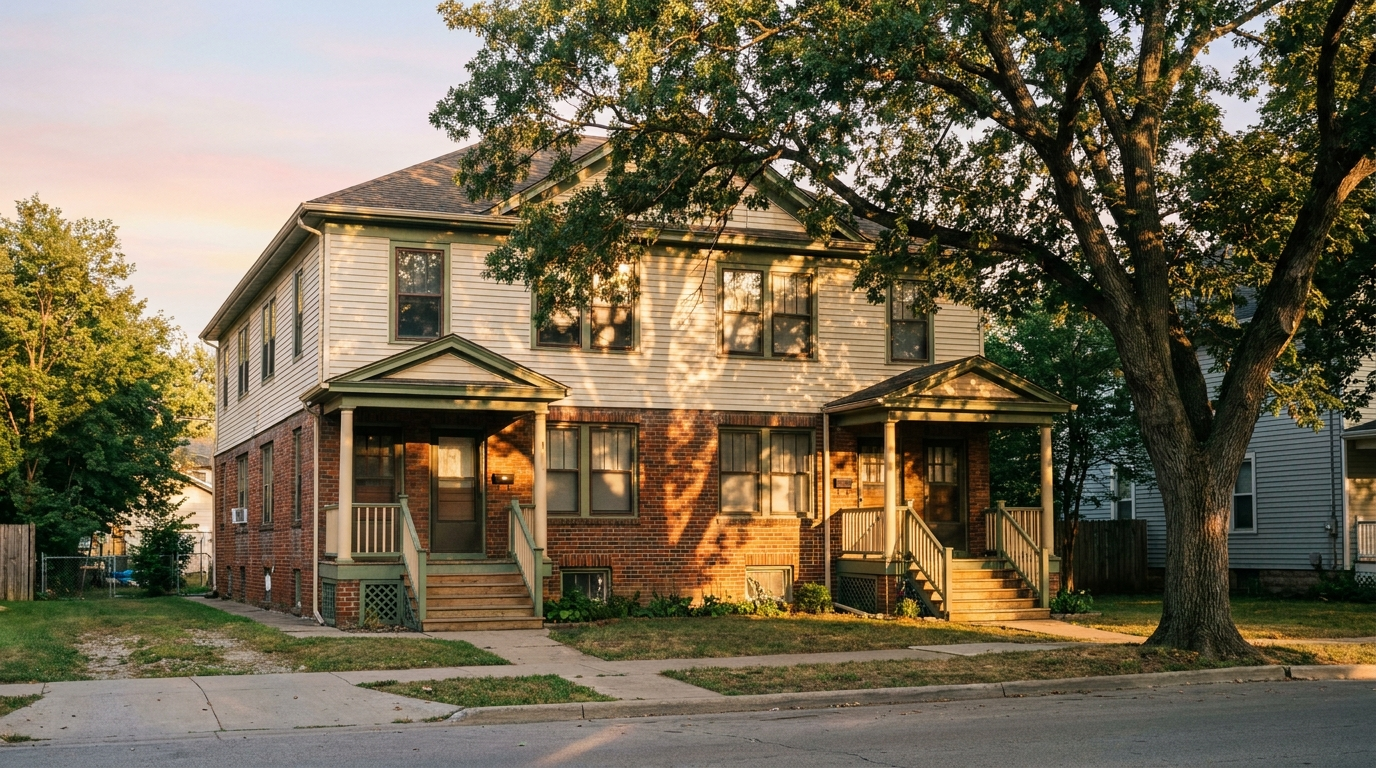
The classic version is a duplex: you take one unit, a tenant takes the other. But it also works with a basement apartment, a garage ADU, or simply a spare bedroom. What makes it powerful isn't the property type — it's that owner-occupants get the best financing in America, and house hacking lets you point that financing at a building that earns.
The math, in one breath
Say you buy a $425,000 duplex with an FHA loan at 3.5% down. Your all-in monthly cost — mortgage, insurance, taxes, and a maintenance reserve — lands around $3,435. The other unit rents for $1,850. After a realistic 5% vacancy allowance, your real monthly cost is about $1,677. That's less than the median one-bedroom rent in the same metro — except you own the building, and about $42,000 of equity accrues over the first five years even if prices never move.
Why lenders like you more than an investor
Investment-property loans want 20–25% down and charge a premium rate. Move in yourself, and the rules change:
FHA — 3.5% down on up to four units, as long as one is yours for at least a year.
VA — 0% down for eligible service members and veterans. The single strongest house-hacking tool that exists.
Conventional — from 5% down, and lenders will often count a share of the expected rent toward your qualifying income.
What nobody should gloss over
You'll be a landlord, and your tenant will live close by. Budget real money for maintenance (we default to 8% of rent), expect an occasional vacant month, and read your local tenancy rules before you list the unit. House hacking rewards people who treat it like a small business run with warmth — not a get-rich trick.
If the numbers work and the trade-offs feel honest to you, it remains one of the few ways a first-time buyer can make a high-cost housing market work for them instead of against them.